
The Invisible Toll of the Night Shift
Early parenthood has a way of warping temporal rhythms, but nocturnal care remains the single most taxing dimension of caring for an infant. When a nursery rustle breaks the silence at 2:00 AM, an unspoken domestic negotiation often unfolds: who woke up first, whose turn it is to offer comfort, and whether a faint whimper signals true hunger or merely an active sleep cycle. In many households, nocturnal duties default to an unbalanced arrangement where one partner absorbs the lion’s share of night wakes. Over time, persistent sleep fragmentation exacts a steep toll on personal wellbeing and relational patience. Realigning this dynamic requires viewing nighttime care not as an isolated burden on one parent, but as a collaborative routine built on clear boundaries and shared operational visibility.
Sleep Fragmentation and Parental Wellbeing
Clinical research across family health journals consistently points to broken sleep as a primary stressor for new parents. Findings published by organizations like the National Sleep Foundation indicate that fragmented rest can disrupt executive function, mood stability, and emotional regulation more profoundly than simple sleep deprivation. When one caregiver routinely shoulders overnight interventions—frequently the nursing or primary leave-taking parent—the resulting exhaustion can precipitate postpartum distress and domestic resentment. Psychologists specializing in early family transitions note that deliberate nighttime co-parenting provides measurable structural relief. Dividing sleep periods into defined blocks, or splitting specific roles such as feeding versus settling, allows both adults to secure stretches of restorative rest. The logistical friction, however, centers on executing these handoffs without inadvertently keeping both partners awake.
Visual Verification Versus Premature Interventions
A primary source of unnecessary nighttime sleep loss stems from premature parental intervention. Pediatric guidance from organizations like the American Academy of Pediatrics (AAP) notes that infants naturally transit through active sleep phases marked by vocalizations, erratic breathing patterns, and limb movements. Caregivers who react instantly to every minor stir often enter the nursery only to disrupt a baby that was poised to resettle independently. Observational tools introduce an informative pause into this cycle. By providing real-time visibility into the crib, cameras allow parents to verify whether a child is in distress or simply shifting between sleep cycles. This visual check protects infant self-soothing progression while sparing caregivers unnecessary trips out of bed, ensuring that nocturnal interventions remain intentional rather than reactive.
System Architecture: Dedicated Consoles and Network Streaming
Structuring an equitable night routine often depends on selecting the right technological framework. When examining baby monitor types explained across consumer tech literature, hardware broadly divides into closed-loop radio frequency (RF) units and Wi-Fi-enabled cloud cameras. Closed-loop setups feature a physical handheld console operating on dedicated frequencies independent of home Wi-Fi networks, providing immediate wake-up responses with minimal signal delay. Conversely, Wi-Fi models stream feeds to mobile applications on smartphones or tablets, extending visual access beyond local coverage. Each architecture serves different household dynamics: while an on-duty caregiver resting beside the crib benefits from a standalone bedside display that avoids digital notification distractions, an off-duty partner or working parent may appreciate checking status remotely via a smartphone without disturbing the physical console in the primary bedroom.
Nursery Setup and Physical Placement Protocols
Technological tools only aid nighttime collaboration when implemented under sound safety and nursery design principles. Authoritative baby monitor setup instructions from pediatric safety organizations emphasize maintaining a minimum clearance of at least three feet between electrical power cords and any point within an infant’s crib or bassinet to eliminate strangulation hazards. Proper mounting angles are equally critical, offering an unobstructed view of the infant’s mattress plane without introducing intrusive indicator lights that disrupt nocturnal melatonin production. Configuring tailored motion alerts and sound sensitivity thresholds further minimizes false triggers, allowing quiet environmental noise like white-noise machines to filter out while ensuring legitimate infant distress reaches the adult responsible for that specific shift.
Dual-Interface Architecture in Household Coordination
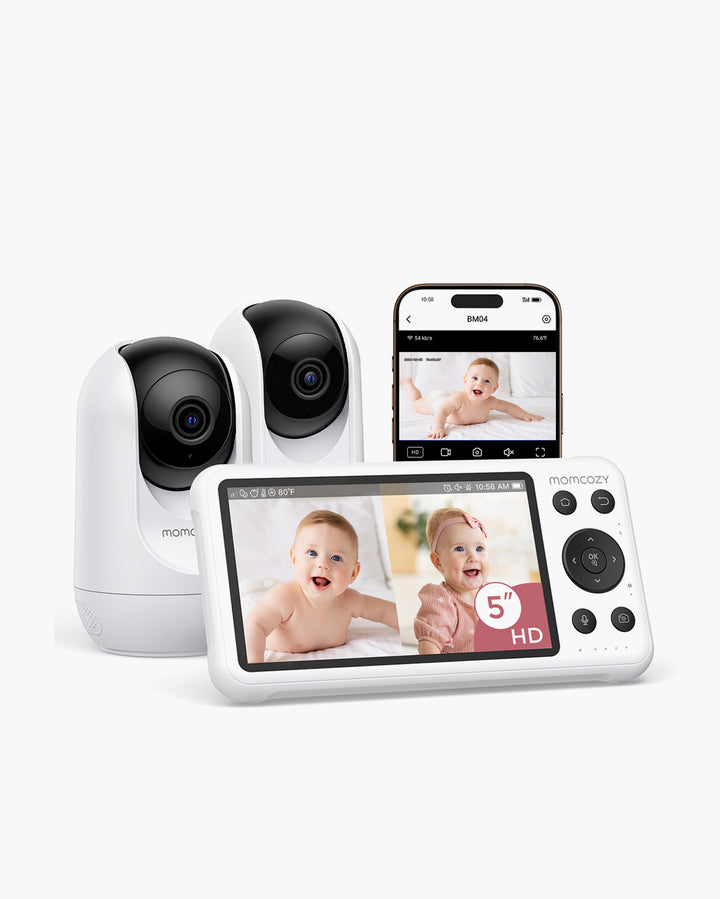
Hybrid monitoring devices demonstrate how hardware flexibility can streamline overnight partner handoffs. Platforms like the Momcozy 5-Inch Dual-mode Smart Baby Monitor illustrate this operational concept by pairing a dedicated 5-inch handheld display with simultaneous mobile app connectivity. This dual-access model prevents device contention between partners. For instance, the caregiver taking the initial sleep shift can keep the standalone 5-inch unit on their nightstand, monitoring motion alerts and checking the video feed without relying on their smartphone. Concurrently, the partner sleeping in another room can access the nursery stream via the mobile application when their scheduled shift arrives, bypassing the need to enter the master bedroom to retrieve a physical screen. Multi-camera functionality also extends this structure to multi-child households, keeping parental oversight coordinated without adding hardware clutter. For sleep-deprived parents managing 3:00 AM handoffs, the easiest baby monitor to use is often the one that removes unnecessary operational friction, allowing each person to access nursery feeds on their own terms.
Sustaining Partnership Beyond the Screen
Nursery technology cannot replace direct interpersonal communication, but it can remove the logistical hurdles that provoke nighttime conflict. Establishing a sustainable post-bedtime routine starts with deliberate daylight conversations: clarifying shift hours, defining what sounds warrant an active response, and fostering mutual trust so the off-duty partner can sleep without lingering anxiety. When monitoring devices function as objective support tools rather than drivers of continuous hyper-vigilance, both partners gain the agency to rest and respond effectively. Nighttime caregiving transitions from a solitary struggle into an organized domestic partnership, protecting parental health alongside infant care.

- How Do You Know When It’s Time to Consider Addiction Rehab? - June 1, 2026
- 201 Great Father’s Day Quotes to Inspire and Empower Him - May 12, 2026
- 179 Happy Mother’s Day Quotes for Mom in 2026 - April 20, 2026